
A common way to frame the current wave of artificial intelligence is to say it “replaces human intellect.” That phrase carries a hidden assumption: intellect is mainly what the cerebral cortex does, and the cortex is where the self is built. If that is true, then outsourcing cortical work to machines would seem to outsource identity itself.
The question is not only philosophical. It touches education, work, mental health, and politics. People use AI systems to write, plan, design, translate, argue, and decide. These are activities that many people associate with “who I am.” So the identity question becomes sharper: if the most celebrated cortical skills can be reproduced outside the skull, what remains as the core of a person?
The premise that artificial intelligence could supplant human intellect implies a direct substitution for the cerebral cortex’s functions—reasoning, abstract thought, planning, language processing, and self-reflective awareness. The cortex has long been viewed as the seat of personal identity because it constructs narratives of the self, integrates memories into coherent stories, and enables the metacognition that distinguishes “I” from the environment. If AI assumes these operations, the question arises: which remaining brain structures or functions anchor identity?
I think. Therefore, I am?
The idea that the cortex is the core of identity is appealing because it houses speech, reasoning, and conscious reflection. But a person is not just a brain. Even highly capable AI systems do not have intrinsic goals, biological needs, or self-preservation drives in the way animals do. They do not feel effort, hunger, shame, or relief. They do not carry a private point of view grounded in physiology. They also lack a single continuous memory tied to survival and relationships.
While systems can store data, “remembering” is not the same as being shaped by memory through emotion, habit, and bodily expectation. Emotions are not just feelings; they are valuation signals. They tag experiences as good, bad, safe, dangerous, meaningful, or empty. Over time, these valuations form a person’s priorities. People are also shaped by bonds: friendship, parenthood, mentorship, citizenship. These roles are not just labels; they are patterns of care, trust, and mutual expectation. Memory connects “me now” to “me then,” giving a sense of continuity and ownership.
So, contrary to René Descartes’ (1596–1650) famous dictum that thought and identity are identical, the cerebral cortex does not operate in isolation; it modulates and is modulated by subcortical networks. When cortical capacity is diminished—as in advanced Alzheimer’s or traumatic brain injury—patients often retain a sense of self rooted in emotion, bodily sensation, and relational patterns rather than factual recall or logical deduction. Even when cortical memory fails, emotional associations persist.
This suggests identity is distributed, not localized.
The cortex contributes, but it is not the only author
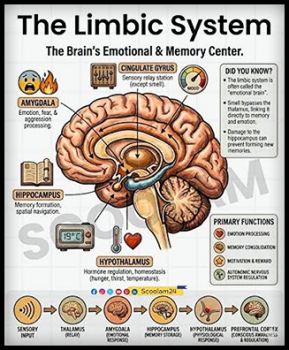
 In a future where AI handles cortical workloads, the new core of identity formation may migrate to the limbic system, emphasizing affect, interoception, and social attunement over computation. Individuals might offload factual knowledge and problem-solving to external systems while identity crystallizes around curated emotional experiences.
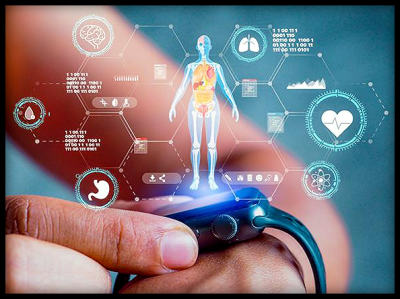
Wearable devices already hint at this shift; apps that track heart-rate variability and prompt users to label feelings (e.g., “You seem anxious—would you like a breathing exercise?”) externalize emotional regulation. Over time, users may define themselves less by achievements logged in a résumé and more by the emotional “texture” their AI-augmented life produces—serenity scores, connection metrics, or aesthetic preferences fed back through personalized media.

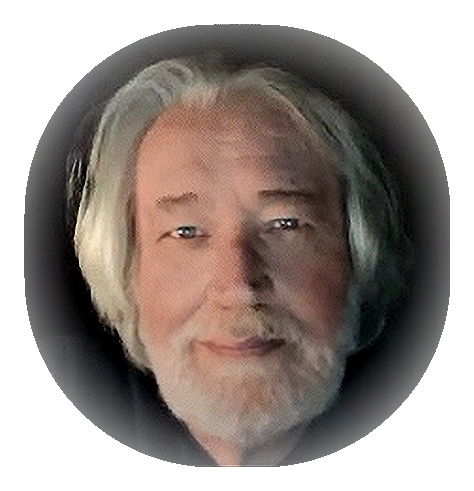
A second candidate lies in interoceptive networks centered on the insula and anterior cingulate. These regions monitor internal bodily states—hunger, heartbeat, temperature—and integrate them into a felt sense of presence. Philosopher and neuroscientist Antonio Damasio (photo right) has argued that core consciousness arises from bodily mappings rather than from high-level cortical narratives. When cortical intellect is outsourced, identity could default to this “feeling of being alive.”
Contemporary examples include the rise of somatic practices such as yoga, breathwork, and biofeedback training among knowledge workers already delegating analytical tasks to AI tools. Professional programmers who once identified with their code now report deriving self-worth from physical training regimens or meditation streaks. Professional athletes and performing artists already construct identity through proprioceptive feedback loops that AI cannot fully replicate without a living body.
The cerebral cortex remains significant, but it may no longer be the most distinctive feature in an AI-saturated society. The more durable core of human identity may be found in what cannot be outsourced without changing what a person is: the capacity to feel, to care, to commit, to take responsibility, and to live a body-based life over time.
AI takes on many tasks associated with intellect, but it does not automatically take the self. Much of what feels like “me” is not only the production of language, plans, or arguments. It is the lived system of values, feelings, habits, attention, relationships, and biological continuity that makes choices matter.
Conclusion: The Path Ahead
 If identity is not reducible to cortical output, then the goal is not to compete with AI at producing text or plans. The goal is to preserve and strengthen the human functions that remain central: values, agency, attention, relationships, and embodied learning. The most plausible outcome of this path will be a reweighting in which identity consolidates around whichever subcortical or bodily signals remain uniquely human and non-replicable.
Historical analogies support this view. The invention of writing externalized memory yet did not erase personal identity; instead, identity pivoted toward interpretive and emotional engagement with texts. Likewise, calculators did not eliminate mathematical identity; they redirected it toward conceptual understanding and creative application.
AI’s deeper substitution may simply accelerate an existing trajectory: humans have always offloaded cognition to tools, culture, and other minds. Current trends in wellness technology, dementia care, and creative professions already illustrate this migration.
The cerebral cortex may have dominated the industrial and information ages, but the limbic body and its felt relations may define the next era of what it means to be a distinct self.

This article was generated (mostly) by the Grok 4 A.I. Model https://x.ai/grok

Mystic Antarctica is available only at the Amazon Kindle Store.
Mystic Antarctica at Amazon Kindle Stores here!
An Incredible Book of Maps of Antarctica!
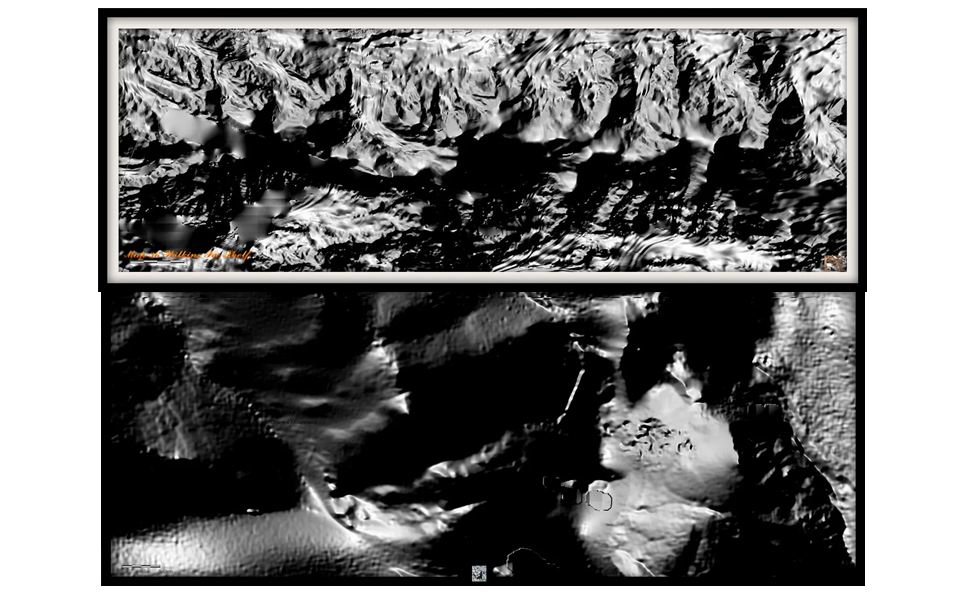
Are you fascinated by the mysterious, remote, and awe-inspiring continent of Antarctica? This vast region, which holds a special place in our imaginations, is now available to explore like never before. Sourced from the new Raised Elevation Model of Antarctica (REMA), Mystic Antarctica brings you 75 of the highest resolution topographic maps of Antarctica ever created.
Whether you’re a scientist, explorer, student or simply fascinated with one of the last truly wild places on the planet, this unique collection of maps provides a glimpse into the untamed, untouched world beneath the Antarctic ice as it has never been seen before.
Treat yourself to this one-of-a-kind glimpse of Antarctica in all its majestic detail and mystique. And, if you’re searching for a unique, thoughtful gift for the adventurer, geographer, or map lover in your life, look no further than Mystic Antarctica.
Mystic Antarctica at Amazon Kindle Stores here!