But what if we could heal this “original flaw,” as some liken it to the biblical fall from grace? Minimizing or eliminating this noise isn’t mere science fiction;
Trifles, Light as Air
But what if we could heal this “original flaw,” as some liken it to the biblical fall from grace? Minimizing or eliminating this noise isn’t mere science fiction;
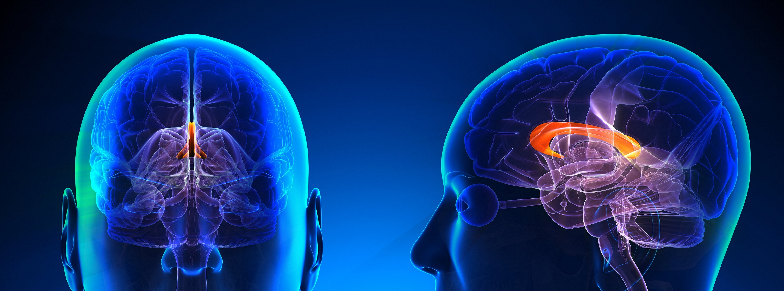
When compared to other mammals, the human corpus callosum is relatively small in size, a surprising trait given our advanced cognitive abilities. While absolutely large (about 10 cm long and 1-2 cm thick), it’s undersized relative to our expansive neocortex. In chimpanzees, our closest relatives, the corpus callosum is larger relative to their smaller brains.
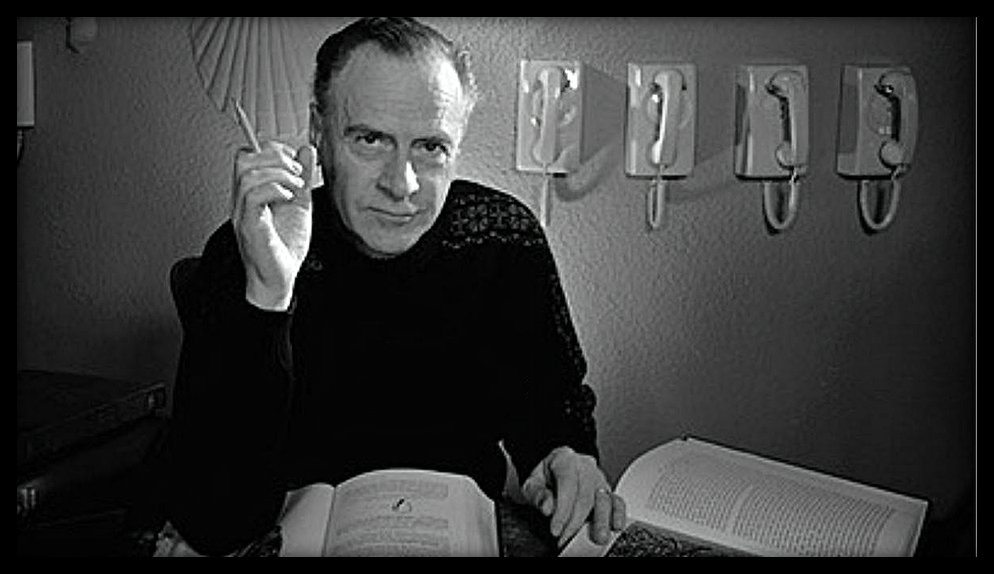
Marshall McLuhan’s concept of “narcissus narcosis” is one of the most intriguing and cautionary ideas in his media theory, particularly as outlined in his 1964 book Understanding Media: The Extensions of Man. Drawing from the Greek myth of Narcissus—a beautiful youth who falls in love with his own reflection in a pool of water, mistaking it for another being—McLuhan uses this metaphor to describe a psychological and perceptual state induced by media technologies.

AI chatbots, as a medium, profoundly influence content creation by homogenizing outputs and embedding biases, with cultural consequences like eroded originality and reinforced inequalities. Societally, they drive efficiency but risk job loss, educational divides, and ethical quandaries.

The medium isn’t neutral; it imposes its own logic and biases, often overshadowing the intended message. This idea challenges us to look beyond what is said to how it’s delivered. McLuhan used examples like the electric light bulb—not for its “content” of illumination, but for enabling entirely new patterns of human activity, such as night shifts and 24-hour economies.
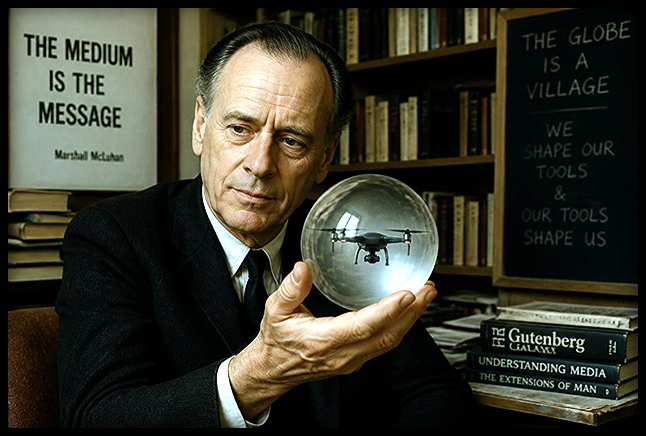
First, let’s buzz into drones. These whirring wonders are the ultimate remote control for reality, turning pilots into armchair adventurers and warfare into a video game. Sensory-wise, drones extend our eyes and ears into the ether, but they numb our other senses in the process. Drones extend our vision to god-like heights, but they amputate the tactile terror of being there.
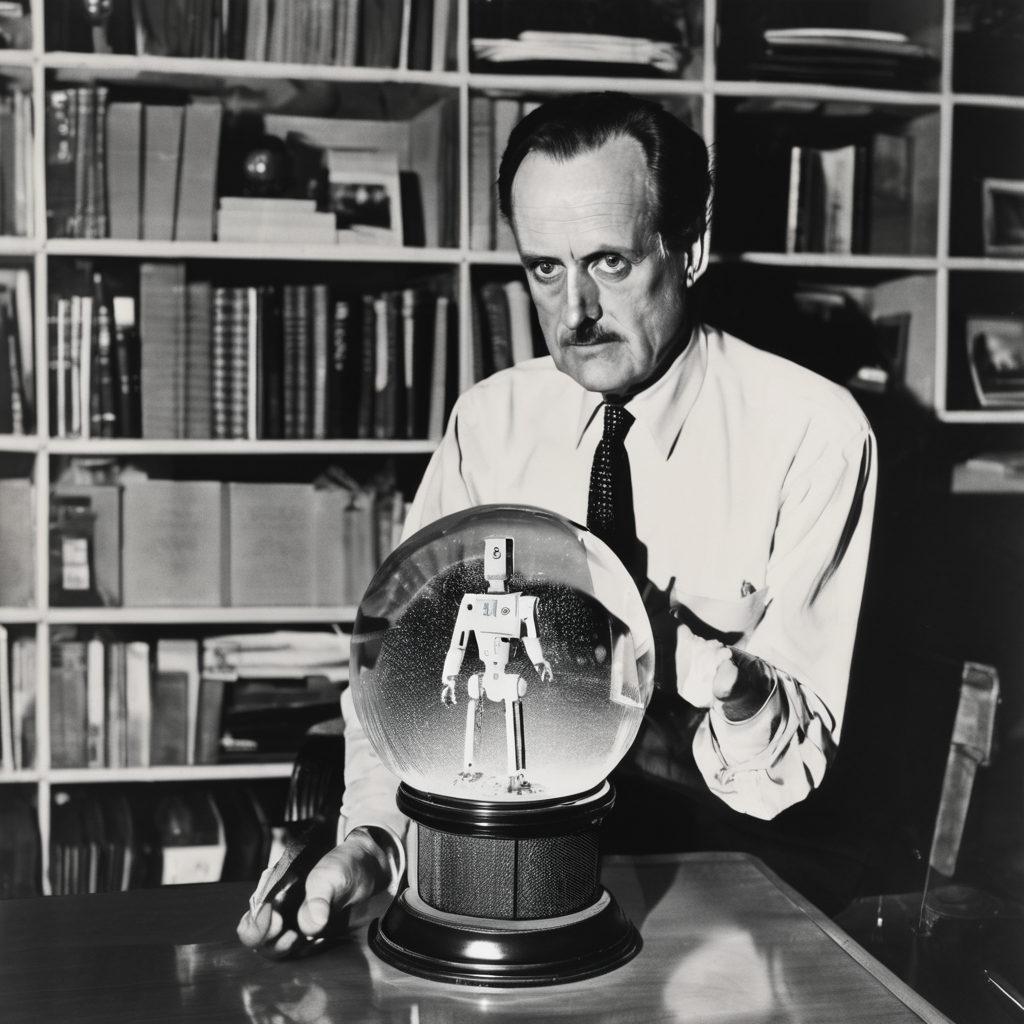
In the realm of media theory, few phrases have resonated as profoundly as “The medium is the message.” Coined by the Canadian philosopher and media theorist Marshall McLuhan (1911-1980), this concept posits that the form or channel through which information is conveyed—the medium—exerts a far greater influence on society and human perception than the content itself.
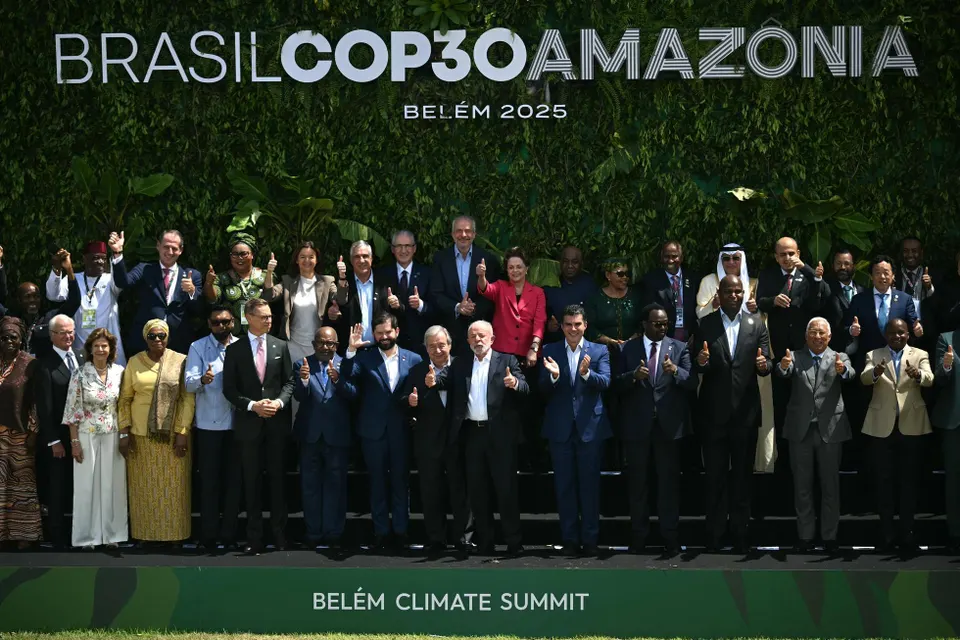
For over three decades, the prevailing view on climate change has shaped global policies and public opinion. The central idea was clear: human activity, particularly in Western nations, was driving catastrophic environmental shifts through carbon emissions. Yet, recent developments have begun to challenge this long-held stance.
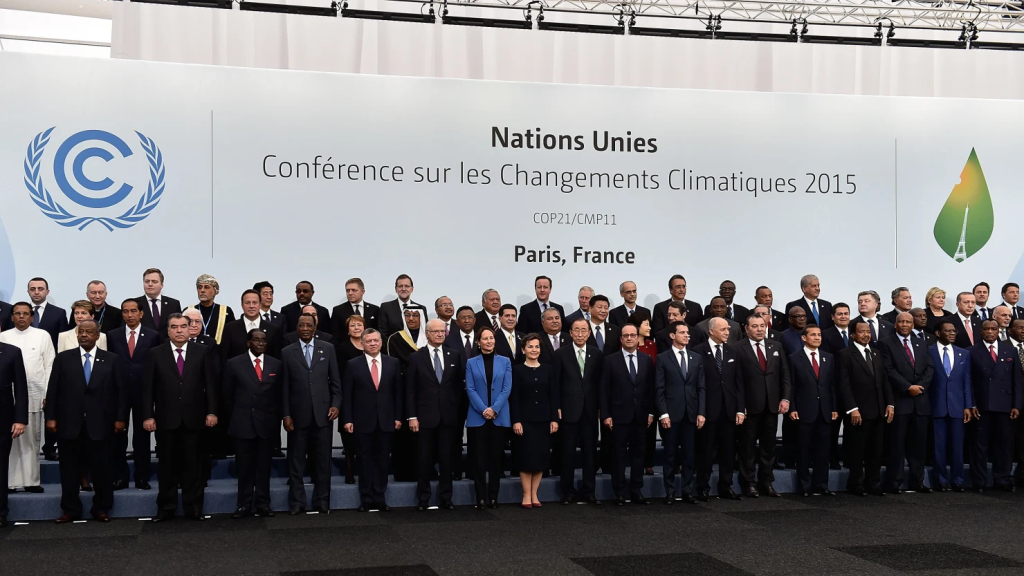
The “ratchet mechanism” is a central, yet often understated, feature of the Paris Climate Accord, designed to ensure that global emissions reductions progressively tighten over time. Unlike traditional treaties with fixed targets, the Accord’s structure relies on Nationally Determined Contributions (NDCs), where countries voluntarily submit their own emission reduction pledges every five years.

In the glittering halls of international diplomacy, the Paris Climate Accord of 2015 was hailed as a landmark achievement—a united front against the existential threat of climate change. Ratified by 196 parties, it commits nations to limit global warming to well below 2°C, preferably 1.5°C, above pre-industrial levels. On the surface, it’s a noble endeavor, fostering cooperation to curb greenhouse gas emissions. But peel back the layers, and a darker reality emerges: the Accord is profoundly anti-democratic.