
Picture this: a Grade 12 student finishes a physics lab on projectile motion. His calculations match Newton’s laws perfectly. Two weeks later the teacher mentions Einstein and says Newton was “wrong.” The student stares at his data sheet and wonders, “Did I just waste three hours proving something false?”
That uneasy feeling sits at the heart of how science actually works. Theories rise, get tested hard, then get replaced. Yet the lab tools, the numbers on the ruler, and the basic ways of checking results often stay the same.
The puzzle is simple: if science keeps overturning its own best ideas, why should anyone trust it?
The answer turns out to be surprisingly practical.
How True Becomes False Yet Remains True

Science never claims a theory is the final, perfect picture of reality. A theory counts as good when it matches observations inside a certain range and makes useful predictions. When new measurements fall outside that range, the theory gets limited, not trashed. The old numbers and lab methods usually survive because they still work inside their original range. Think of it like a map. A city map from 1995 is “wrong” for finding today’s new bike lanes, but it remains perfectly fine for walking the same downtown streets.
This pattern shows up again and again.
Take Newton’s picture of gravity. For everyday speeds and ordinary distances it still guides satellite launches and roller-coaster design. Only when speeds approach the speed of light or gravity becomes extreme does the map need upgrading. Einstein’s general relativity keeps all of Newton’s successful predictions at low speeds and simply adds corrections for the extreme cases. Engineers therefore keep using Newton’s equations; they just know the fine print.
A more dramatic swap happened with the old idea of phlogiston. Eighteenth-century chemists pictured a fire-like substance escaping during burning. The theory organized lots of observations about flames and rust. Then careful weighing showed metals actually gain mass when they burn. The new oxygen theory reversed the story—something was being added, not released. The scales, the glassware, and the habit of measuring mass stayed exactly the same. Only the explanation changed direction. The old observations about burning were kept; they were simply re-labeled.
Quantum mechanics performed a similar update on classical physics. At the scale of baseballs and bridges, Newton’s and Maxwell’s laws still rule. Only when objects shrink to atoms or electrons do probabilities and energy packets matter. The correspondence principle states that the quantum rules must reduce to the classical ones when sizes grow large. That built-in safety net lets engineers keep using classical formulas for bridges while physicists use quantum rules for microchips.
Even the shift from Earth-centered to Sun-centered astronomy followed the same script. Ptolemy’s model with its extra circles predicted planet positions well enough for calendars and navigation. Copernicus and Kepler offered a simpler geometry that matched the same angular measurements. The old tables were not burned; they were recalculated with fewer circles. The instruments and the habit of recording angles remained continuous.

These replacements look chaotic until you notice three steady habits. First, new theories must recover the accurate predictions of the old ones inside the old domain. Second, they must also explain the awkward new data that broke the previous model. Third, they usually do both jobs with fewer extra assumptions. When all three conditions are met, the community switches maps.
The process never reaches a final, unrevisable chart. That is not a flaw; it is the rule that keeps inquiry alive. If a theory were declared perfect, no one would bother checking further.
By staying open to correction, science turns each apparent failure into a sharper boundary. Newton’s map is now known to work below roughly one-tenth the speed of light. Oxygen chemistry works for every reaction students meet in high-school labs.
Those limits are useful knowledge, not defeats.
Passing the Grade

Students can picture the growth of theories as a ladder rather than a battlefield. Each new rung rests on the previous one and widens the view. You can still stand on the lower rungs when they are the right height for the job. The ladder keeps extending because someone always checks one step higher with a better instrument or a new condition. The climb never finishes, yet each added rung improves the practical reach—better medicines, faster computers, safer bridges.
The same ladder image explains why absolute certainty is not required for progress. Engineers do not need a perfect theory of everything to design a phone; they need reliable rules inside the range of voltages and temperatures the phone will meet. Those rules come from earlier rungs that have already been tested for centuries. Science therefore moves forward by tightening the fit between prediction and measurement, not by waiting for an unreachable final truth.
In short, the apparent loop of refutations is actually a tightening spiral. Methods and successful numbers carry forward; only the outer edges of explanation get redrawn. That pattern lets a Grade 12 student trust both her projectile-motion lab and the newer ideas she will meet in university—because each level of the ladder has already proved its worth inside its own clearly marked territory.
This article was generated (mostly) by the Grok 4 A.I. Model https://x.ai/grok
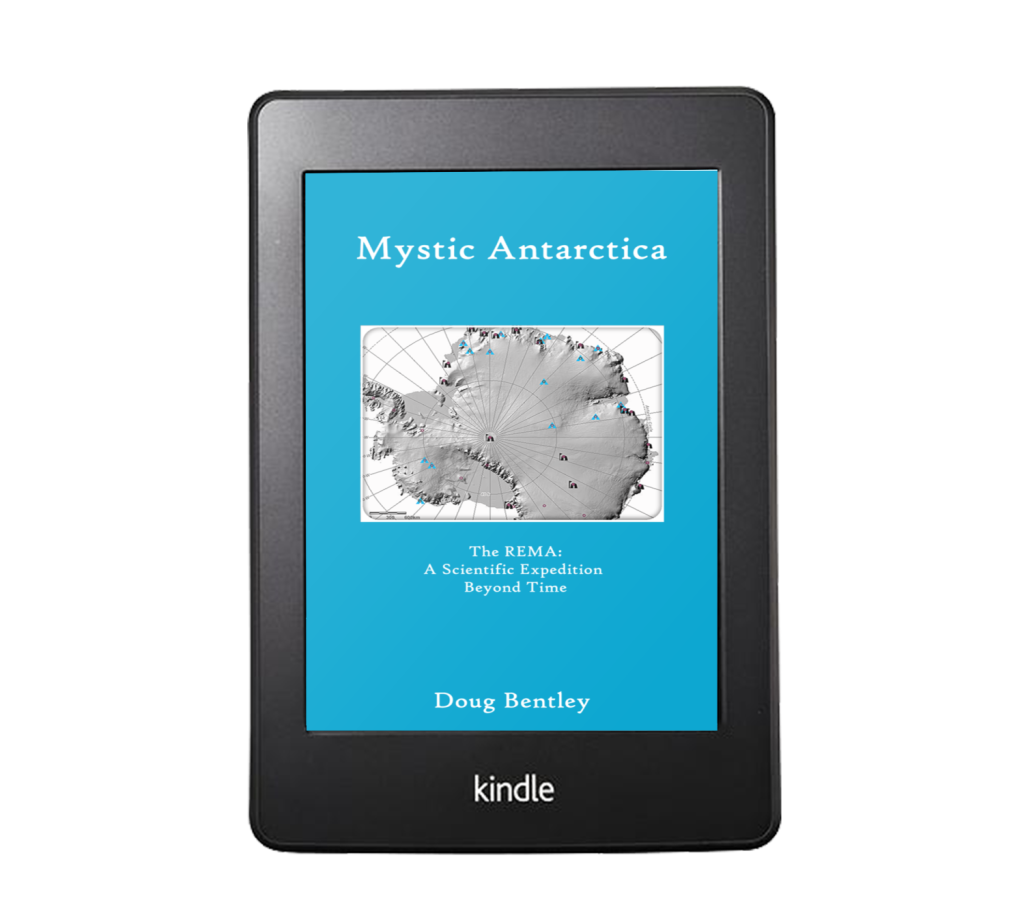
Mystic Antarctica is available only at the Amazon Kindle Store.
Mystic Antarctica at Amazon Kindle Stores here!
An Incredible Book of Maps of Antarctica!
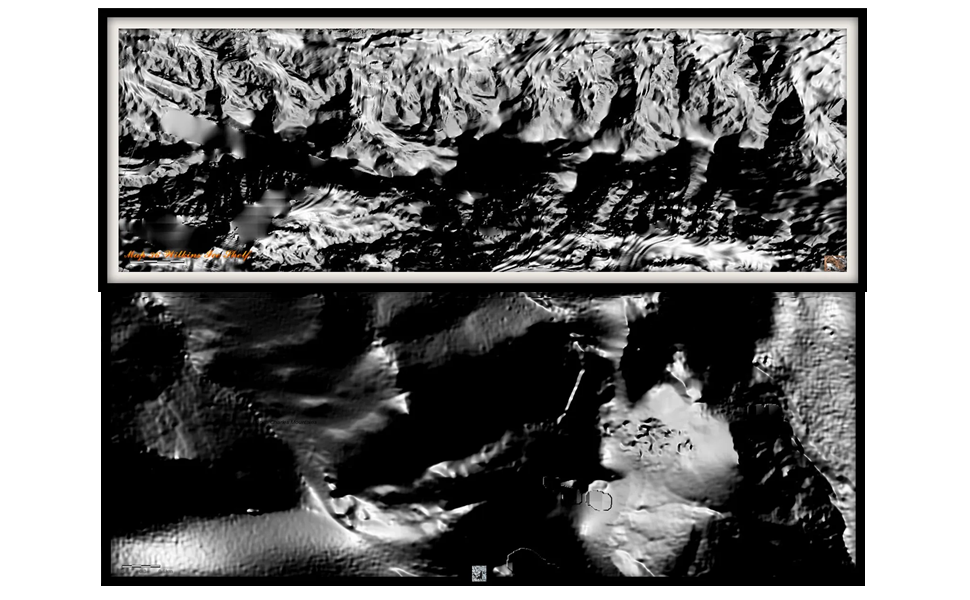
Are you fascinated by the mysterious, remote, and awe-inspiring continent of Antarctica? This vast region, which holds a special place in our imaginations, is now available to explore like never before. Sourced from the new Raised Elevation Model of Antarctica (REMA), Mystic Antarctica brings you 75 of the highest resolution topographic maps of Antarctica ever created.
Whether you’re a scientist, explorer, student or simply fascinated with one of the last truly wild places on the planet, this unique collection of maps provides a glimpse into the untamed, untouched world beneath the Antarctic ice as it has never been seen before.
Treat yourself to this one-of-a-kind glimpse of Antarctica in all its majestic detail and mystique. And, if you’re searching for a unique, thoughtful gift for the adventurer, geographer, or map lover in your life, look no further than Mystic Antarctica.
Mystic Antarctica at Amazon Kindle Stores here!